

Xsolla Community Hub - Should Indie PC Studios Build a Direct Player Channel in 2026
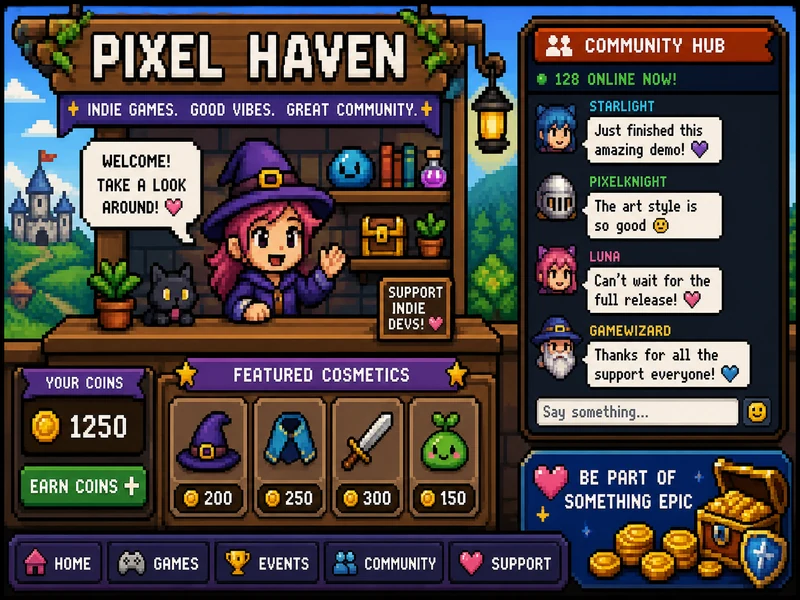
On August 13, 2026, ahead of Gamescom, Xsolla expanded its Publishing Suite with a Community Hub, no-code Live Ops event templates, cosmetics merchandising, video product media, and launcher notifications for PC studios. The Xsolla announcement and the August 2026 release notes frame it the way every payments-and-publishing vendor frames a launch: own your audience, keep more margin, control your success.
If you are an indie PC studio searching xsolla community hub this week, the announcement is not the useful part. The useful question is a business decision: should you build and staff a direct player channel at all, or is your energy better spent on Steam Community and Discord where your players already are? A storefront tool does not answer that. A framework does.
This article is that framework. It is not a rewrite of the press release. It compares an owned Xsolla channel against Steam Community and Discord across the axes that actually decide the outcome - first-party data, margin, moderation, staffing, privacy, and break-even - and gives you a six-gate keep/hold worksheet (X1-X6) you can run in an afternoon before you commit a single sprint to it.
Non-repetition: this is not Steam Community Hub announcements and store-metadata parity, which is about keeping your Steam page consistent during a fest. It is not Steam back-catalog monetization after record H1 2026, which is a keep/hold on discounting old titles. It is not how to price and bundle your indie games. This URL owns one intent: is a direct-to-consumer Xsolla channel worth the operating cost for your specific PC game?
| Audience | Start here | Done when |
|---|---|---|
| Beginner / solo dev | What Xsolla shipped, the three-channel table | You can explain what a "direct player channel" actually is and is not |
| Programmer / integrator | Data-flow checklist, launcher notifications, webhooks | You know what you would integrate and what it costs in engineering time |
| Studio lead / company | Governance owner table, cost and break-even math | Seat, staffing, and privacy ownership are named, with a break-even number |
| Creator / community manager | Minimum viable calendar, moderation reality | You have a weekly plan and an honest staffing estimate |
Time estimate: 60-90 minutes to run the X1-X6 worksheet and produce a keep/hold decision. Do not start an integration before you finish it.
Default recommendation: for most premium, single-purchase indie PC games, hold a full direct channel and instead run a lightweight owned mailing list plus Steam Community and Discord. Keep and build the Xsolla channel when you have a live-service or cosmetics-driven title, recurring content, and at least one person who can own community operations. The deciding factor is not the tool's quality - it is whether you have recurring reasons to talk to players and someone to do the talking.
What Xsolla actually shipped
Strip the marketing and there are five concrete capabilities. Understanding each one plainly is the prerequisite to deciding whether you need it.
- Community Hub - a hosted space you own (outside Steam's and Discord's walls) where players can see news, events, and content tied to your game. The pitch is first-party data: you learn who your players are, not just aggregate Steam stats.
- No-code Live Ops event templates - a way to schedule and run in-game or store events (sales, drops, seasonal content) without building an events backend yourself.
- Cosmetics merchandising - store surfaces for selling cosmetic items, which only matters if your game has cosmetics and a live economy.
- Video product media - richer store pages with video, which helps conversion on a direct storefront.
- Launcher notifications - the ability to push messages to players through a launcher, which is powerful and also a responsibility (notification fatigue and consent are real).
The common thread is direct-to-consumer: selling and communicating outside the Steam relationship so you keep more margin and own the data. That is genuinely valuable for the right game. It is also genuinely a second product to operate for the wrong one.
The real decision - owned channel vs Steam Community vs Discord
You are not choosing in a vacuum. You already have two channels most players use. Here is the honest comparison.
| Axis | Xsolla Community Hub (owned) | Steam Community | Discord |
|---|---|---|---|
| First-party data | Strong - you own the relationship and data | Weak - Valve owns most of it | Partial - you own the server, not payment data |
| Where players already are | Nowhere yet - you must drive them there | Everywhere - it is the storefront | Very active - most indie communities live here |
| Margin on direct sales | Higher (fewer platform cuts on direct) | Standard Steam revenue share | N/A - Discord does not sell your game |
| Setup cost | High - integration + content + ops | Low - already exists | Low - create a server |
| Ongoing staffing | High - it is a channel you must feed | Medium - reviews, discussions, announcements | Medium/High - live moderation and chat |
| Moderation burden | You own it (policy, tools, staff) | Shared with Valve tooling | You own it, with community mods |
| Best fit | Live-service, cosmetics, recurring content | Every PC game | Every indie game building a community |
The pattern to notice: an owned channel trades convenience for control. You gain data and margin; you pay in setup, staffing, and moderation. That trade is worth it when the upside (recurring revenue, a real economy, high LTV players) is large. It is a net loss when you are shipping one premium title and the channel would sit empty between updates.
For the channels you already run, keep them healthy: our roundups of 25 best game-development Discord servers and communities and 20 free game monetization tools and analytics cover the low-cost baseline every studio should have before adding a paid owned channel.
The X1-X6 keep/hold worksheet
Run these six gates before you commit. Write the answers down; a "hold" with a named reason is a successful outcome, not a failure.
X1 - Do you have recurring reasons to talk to players?
A direct channel is only alive if you feed it. If your content roadmap is "ship the game, then DLC someday," you do not have enough to say. Pass X1 if you have at least a quarter of scheduled updates, events, or drops. Otherwise, hold - an empty hub is worse than no hub.
X2 - Does your game have a live economy or cosmetics?
Cosmetics merchandising and live-ops events pay off when players buy recurring items. Pass X2 if you sell (or will sell) cosmetics, battle passes, or consumables. If you are a one-time premium purchase with no economy, this gate is a hold - you would be building a store for products you do not have.
X3 - Who owns operations, and do they have the hours?
A channel is staffing, not software. Pass X3 if you can name one person who owns the calendar, moderation, and support, with real weekly hours allocated. If the honest answer is "we will all pitch in," that is a hold - shared ownership of a live channel means no ownership.
X4 - Can you handle moderation and privacy obligations?
An owned community means you own the moderation policy, the tooling, and the legal exposure (data handling, consent, regional privacy law). Pass X4 if you have a moderation plan and a data-handling answer you would be comfortable defending. Our 14 free UGC moderation policy and community-safety resources is a starting kit. If you cannot answer the privacy question, hold.
X5 - Does the margin math beat the operating cost?
This is the gate most studios skip. Estimate the incremental revenue a direct channel would add (higher margin on direct sales + cosmetics), then subtract the fully loaded operating cost (staffing + integration + tooling fees). See the break-even section below. Pass X5 only if the number is positive within a horizon you can fund.
X6 - Is the integration effort proportional to your team?
A solo dev spending three weeks wiring launcher notifications instead of finishing the game is making a mistake, no matter how good the tool is. Pass X6 if the integration is a small, bounded slice of your roadmap. If it competes with shipping, hold and revisit after launch.
Decision rule: you generally want X1-X3 all pass to even consider building, and X5 positive to justify it. X2, X4, and X6 shape how much you build.
A minimum viable community calendar
If you pass the gates, do not over-build. Here is the smallest calendar that keeps an owned channel alive without burning out a small team.
| Cadence | Activity | Owner | Time |
|---|---|---|---|
| Weekly | One post: progress, a clip, or a question | Community owner | 30-45 min |
| Biweekly | One community event or prompt (screenshot day, poll) | Community owner | 1 hour |
| Monthly | One meaningful update or drop tied to the roadmap | Dev + community | Tied to dev work |
| Per release | Launcher notification + hub news + Steam parity | Dev + community | 1-2 hours |
| Always | Moderation and support triage | Community owner | Daily check-in |
The rule is sustainable over impressive. A quiet-but-consistent hub beats a flashy launch that goes silent in three weeks. Silence on an owned channel actively signals "abandoned" to new players in a way that a quiet Discord does not.
Implementation and data-flow checklist (for programmers)
If you build, treat it like any other integration: bounded, verified, reversible.
- [ ] Map the data flow. What player data enters the hub, where is it stored, and who can access it? Write this down before you wire anything.
- [ ] Scope launcher notifications. Define the events that trigger a notification and add a consent and frequency cap. Notification fatigue kills retention faster than silence.
- [ ] Plan Steam parity. Your Steam page and your hub must not contradict each other on price, content, or event dates. Keep a single source of truth. This is the same discipline as Steam Community Hub store-metadata parity.
- [ ] Verify webhooks and events end to end. Trigger a test event and confirm it lands in the hub, the launcher, and any analytics - then confirm you can roll it back. If webhooks silently fail, you will not know your channel is broken; the failure mode is similar to a Discord live-moderation webhook not firing.
- [ ] Instrument the funnel. Track how many players you actually drive to the hub and what they do there. A channel you cannot measure is a channel you cannot justify at renewal.
- [ ] Keep a kill switch. Know how to pause the channel cleanly if staffing lapses, without leaving a dead storefront live.
Governance owner table (for company evaluators)
Diligence-ready ownership. Every row needs a named person before launch, not after.
| Area | Owner | Question it answers |
|---|---|---|
| Community operations | Named CM/owner | Who runs the calendar and support? |
| Moderation policy | Named owner | What is allowed, and who enforces it? |
| Data and privacy | Named owner | What data is collected, retained, and where; is it compliant? |
| Payments and margin | Finance/owner | What are the real fees and net margin vs Steam? |
| Security | Eng lead | Who reviews the integration and vendor security posture? |
| Renewal / kill | Studio lead | Who decides continue vs shut down at each milestone? |
If a row cannot be filled, that is your answer: hold until it can.
Cost and break-even math
The mistake is comparing a higher margin percentage against zero cost. Do the real math.
Revenue side (incremental):
- Higher margin on sales made directly instead of through the standard storefront cut.
- Cosmetics / live-ops revenue you would not capture without the channel.
Cost side (fully loaded):
- Staffing - the biggest line. A part-time community owner at even 10 hours/week is a real recurring cost. Multiply hours by a realistic loaded rate.
- Integration - one-time engineering to wire the hub, notifications, and analytics.
- Tooling / platform fees - confirm the current Xsolla fee structure at signup; do not assume the demo tier equals your tier.
Break-even example (illustrative - use your own numbers): if a direct channel needs roughly a few hundred dollars a month of loaded staffing plus a one-time integration, you need enough additional margin and cosmetics revenue to clear that before it is worth it. For a premium title selling a few thousand copies with no cosmetics, that bar is rarely met. For a live-service title with a cosmetics economy and 20% of revenue running through direct sales, it can clear easily. The channel is a lever, and a lever only helps if there is weight on the other end.
Verify current pricing and fee structure on the day you sign, because vendor terms change. The principle is stable: do not approve an owned channel on margin percentage alone - approve it on net dollars after staffing.
Premium vs live-service - who keeps, who holds
- Premium single-purchase game, small team, no cosmetics: HOLD. Run a mailing list, Steam Community, and Discord. Revisit only if you add recurring content.
- Premium game with planned DLC and an engaged community: MIX. Start with a mailing list and Discord; consider the hub only if DLC cadence justifies it.
- Live-service or free-to-play with cosmetics: KEEP. This is the archetype the tooling is built for; the data and margin upside is real and recurring.
- Studio with multiple titles and a shared audience: KEEP at the studio level - an owned channel amortizes across a catalog better than across one game.
Common mistakes
- Building the channel because a competitor did. Their live-service economics may not be yours.
- Comparing margin percentage to zero cost. Staffing is the real number; include it.
- Launching loud, then going silent. An abandoned owned channel is worse than none.
- Ignoring Steam parity. Contradictory prices or event dates between your hub and Steam erode trust fast.
- Skipping the privacy answer. An owned community means you own the data obligations; decide before you collect.
- Letting notifications run unbounded. Consent and frequency caps are not optional.
What teams should do next
Solo developer
- Run X1-X6 honestly. If X1 or X3 fails, hold and keep a simple mailing list plus Discord.
- Do not trade shipping time for an empty storefront.
Small team
- Name a community owner and give them real hours before you build anything.
- Start with the minimum viable calendar; expand only if engagement is real.
Company or publisher
- Fill the governance table, run the break-even math with loaded staffing, and set a renewal checkpoint.
- Require Steam parity and a data-handling answer as launch gates.
Creator / community manager
- Draft the weekly calendar and be honest about the hours. Share the plan, not a hype post.
Key takeaways
- On August 13, 2026, Xsolla added a Community Hub, no-code Live Ops events, cosmetics merchandising, video media, and launcher notifications to its Publishing Suite (announcement).
- The real question is not "is the tool good" - it is "do you have recurring reasons to talk to players and someone to do it."
- An owned channel trades convenience for control: more data and margin, but more setup, staffing, and moderation.
- Most premium single-purchase indies should hold a full channel and lean on Steam Community, Discord, and a mailing list.
- Live-service and cosmetics-driven games are the archetype that should keep and build it.
- Run the X1-X6 worksheet; you generally need X1-X3 to pass and X5 (break-even) to be positive.
- Staffing is the biggest cost - compare net dollars after staffing, not margin percentage.
- Keep a minimum viable calendar - sustainable beats impressive; silence signals abandonment.
- Steam parity on price, content, and dates is mandatory if you run both.
- You own moderation and privacy obligations on an owned channel - decide the policy before you collect data.
- Cap launcher notifications with consent and frequency limits to protect retention.
- Verify current Xsolla fees at signup; a demo tier is not your production tier.
FAQ - Xsolla Community Hub for indie PC studios
What is the Xsolla Community Hub?
It is a hosted, studio-owned space (announced August 13, 2026 as part of the Xsolla Publishing Suite) where PC studios can run news, live-ops events, cosmetics sales, and launcher notifications directly with players, outside Steam and Discord. The goal is first-party data and higher margin on direct sales.
Should a small indie studio build a direct player channel?
Usually not for a premium single-purchase game with a small team and no cosmetics - the staffing cost rarely clears break-even. It makes sense for live-service or cosmetics-driven titles with recurring content and a named community owner. Run the X1-X6 worksheet before deciding.
Is Xsolla Community Hub a replacement for Discord or Steam Community?
No. Discord is where your active community chats; Steam Community is where buyers already are. An owned hub adds data and margin but must be driven and staffed. Most studios run all three, weighting effort toward where their players already are.
What does an owned channel actually cost?
The largest cost is staffing (a community owner's weekly hours at a loaded rate), plus one-time integration engineering and Xsolla's platform fees. Compare net dollars after those costs against the incremental margin and cosmetics revenue - not the headline margin percentage. Confirm current fees at signup.
What are the privacy and moderation obligations?
Because you own the community and its data, you own the moderation policy, tooling, and data-handling compliance (including regional privacy law and consent for notifications). Decide these before you collect any player data. Free starting kits exist for UGC moderation policy.
How do launcher notifications avoid hurting retention?
Define a small set of meaningful trigger events, add explicit consent, and cap frequency. Unbounded notifications cause fatigue and uninstalls faster than silence does. Instrument opt-outs and watch them.
Do I need Steam parity if I run an Xsolla channel too?
Yes. Your Steam page and your hub must agree on price, content, and event dates, or you erode player trust. Keep one source of truth for store metadata, the same discipline covered in Steam Community Hub store-metadata parity.
When should I revisit a "hold" decision?
Revisit when your game gains recurring content (regular updates, a cosmetics economy, DLC cadence) or when you can fund a named community owner. Those are the conditions that flip X1, X2, and X3 from hold to pass.
Related reading
- Steam Community Hub announcements and store-metadata parity
- Steam back-catalog monetization after record H1 2026 - indie keep/hold
- How to price and bundle your indie games - 2026 storefronts
- 20 free game monetization tools and analytics
- 14 free UGC moderation policy and community-safety resources
- Discord live-moderation webhook not firing - fix